Audio version of this article (podcast in Spanish).
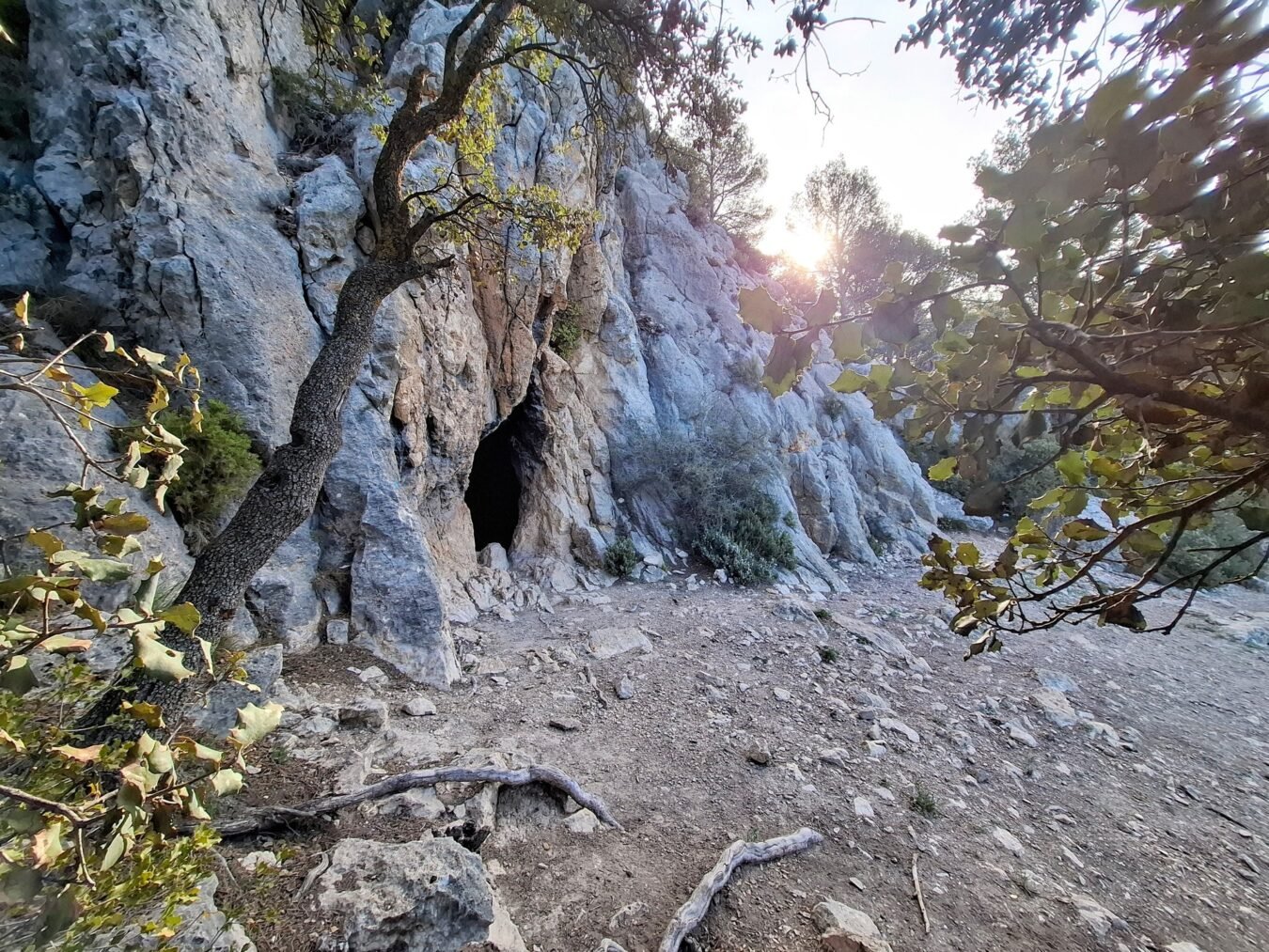
The Cova de Mossén Francés, on the flank of the Sierra del Maigmó — one of the limestone ranges of inland Alicante, about half an hour from the Costa Blanca — is one of those places where nature, history and legend twist together almost magically. Set at more than 1,100 metres above sea level, close to the beauty spot of Xorret de Catí, this natural cave is not only a first-rate piece of landscape but also a story that runs through centuries of local uses, beliefs and traditions.
If you want to leave the noise of the coast behind and get to the heart of inland Alicante, this is an outing that brings together walking, history and nature. And if you are looking for a welcoming, genuine base for it, Casa Rural Castalla is the obvious choice: from the house the cave is a short drive away and then a walk that wakes up every one of your senses.
A cave with a name of its own (and an explosive priest) 🕳️💥📖
The name catches your attention straight away. “Mossén” is an old Valencian honorific for a priest, roughly the equivalent of “Father”, and “Francés” could be either a surname or a nickname. Legend has it that this clergyman, a keen hunter with ferrets, ended up using dynamite to get one of his animals out from underground. The result was startling: not only did he recover his ferret, he opened up the mouth of an impressive limestone cave. That is how the Cova de Mossén Francés was born, in a story that mixes humour, sheer chance and a touch of ecclesiastical irreverence.
Landscape and setting: a natural balcony 🏞️🌄🔦
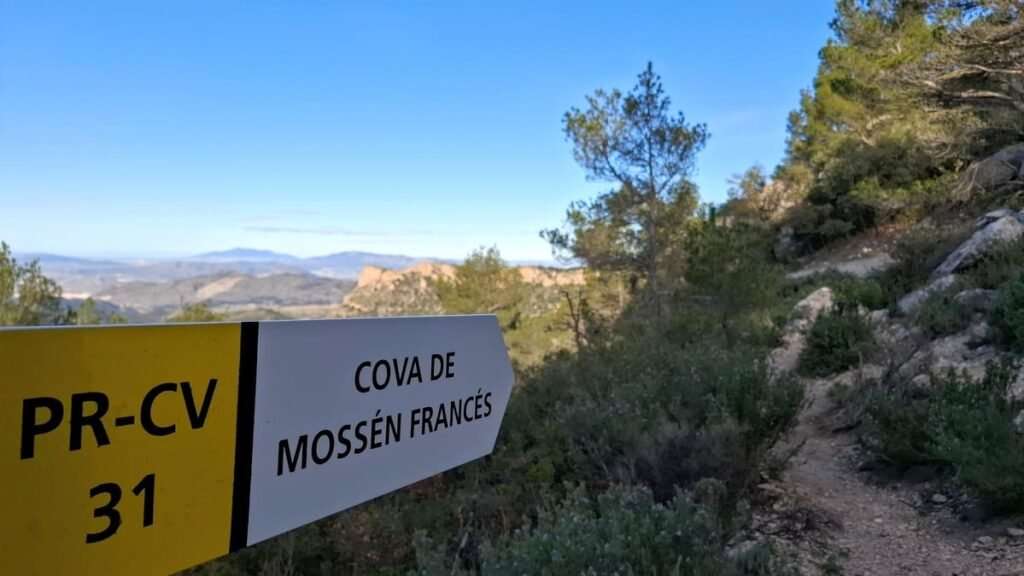
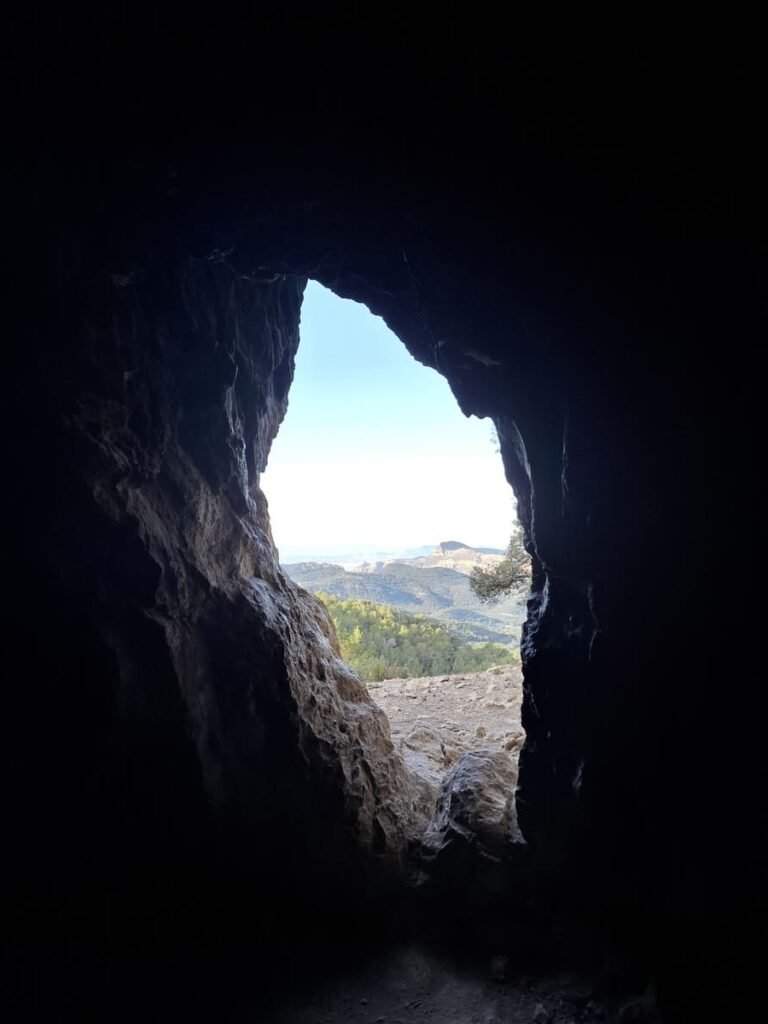
The cave sits at around 1,160 metres, with spectacular views over the Catí valley, the Foia de Castalla — the wide upland basin that Castalla sits in — and the nearby Sierra del Cid. You reach it on the PR-CV 31, a circular waymarked path of about 8 kilometres that starts from the recreation area at Xorret de Catí. In Spain a PR is a short waymarked walking route, signed with white and yellow flashes. The cave is easy to reach for walkers of basic fitness and needs no technical kit: its horizontal gallery, some 30 metres long, can be explored on foot, although a torch is strongly recommended if you want to go in safely.
Past the entrance, part of which was cut artificially with old explosives, the cave opens into a space with a level floor and high ceilings — clear evidence of long human use over time.
History written into the rock of the Cova de Mossén Francés 🕯️📜🧱
Beyond the legend of the hunting priest, there are records of the Cova de Mossén Francés being used by shepherds, who adapted it to shelter alongside their flocks. The levelled floor and the remains of old fires tell of its role as a refuge from the cold and from storms.
There are even signs of occupation in the Andalusi period, when this was Muslim Spain, and the cave may have sheltered bandits and, later, the maquis — the anti-Franco guerrillas who took to the mountains after the Civil War — during the nineteenth century and the years after the Civil War. That mix of uses makes the Cova a genuine stone archive of the rural and social history of the district.
Plants and wildlife: Mediterranean biodiversity 🌿🦉🌞
The country around the cave is a living example of well-preserved Mediterranean woodland. Aleppo pines, holm oaks, thyme, rosemary and rockrose share a patchwork of vegetation that shifts with the seasons. In spring the air fills with the scent of flowers; in autumn ochre tones spread across the landscape.
The wildlife includes Barbary sheep, wild boar, genet and fox, and birds such as the eagle owl, the peregrine falcon and Montagu’s harrier. A paradise for birdwatchers and wildlife photographers.
Walking with history 🥾🗺️🏔️
The PR-CV 31 does not only take you to the Cova de Mossén Francés: it also gives you viewpoints, places to stop and the chance to link up with other landmarks such as the Pou de Neu de Planisses, an old snow well where ice was packed and stored through the summer long before refrigeration. Xorret de Catí is also a regular feature on stages of the Vuelta a España, which adds something extra for cyclists and cycling fans. 🚵♂️🏁📍
From Casa Rural Castalla, getting to Xorret de Catí is quick and easy. We help you plan your route for the morning, pack a picnic and come back to the house to relax in the sitting room, play a board game or cook dinner with local produce. 🍽️🛋️🍷
Tips for your visit 🧢🧭🧴
- Best time of year: spring and autumn, for the mild weather and the colours of the landscape.
- What to take: walking boots, water, a torch and a warm layer, even in summer.
- Take care: there is a sheer drop from the viewpoint outside the cave — keep well back from the edge, especially with children.
- Respect the place: take your litter home, leave the plants alone and do not disturb the animals.
More than a day out: a complete experience ✨🧳🎒
Visiting the Cova de Mossén Francés is much more than walking a waymarked path: it puts you in touch with history, with the traditions of the Alicante mountains and with landscapes that have been silent witnesses to rural life for centuries.
Casa Rural Castalla, right in the historic heart of the town, is the ideal place to stay alongside an outing like this. Its warm atmosphere, its closeness to the walking routes and its commitment to sustainability make it the perfect base from which to explore the Maigmó. 🏡💫🌄
So why not go and find this treasure in the mountains? The Cova de Mossén Francés is waiting, with its explosive history, its picture-postcard views and a legend that still echoes among the rocks. 🧨📷🔍
Get in touch about your stay at Casa Rural Castalla and get ready for an adventure you will always remember. 💼🌿🌟
Ready to experience inland Alicante?
Book your stay at Casa Rural Castalla and take your time discovering places like Plascaves, Castalla Castle and the Sierra del Maigmó. Your inland Alicante getaway starts here.