The historic centre of Castalla can be walked in a morning, and that stroll takes in ten stops that tell almost a thousand years: a manor house, the chapel where the climb up to the castle begins, the birthplace of the writer Enric Valor, a Franciscan convent. Here they are one by one, in the order they come along the street, with what is worth looking at in each.
And if you would rather have someone tell you the story as you go, this very route is loaded into the Civify app, which works as an audio guide while you walk. We explain how it works at the end. Off we go.
The origins of Castalla: a town with a medieval soul
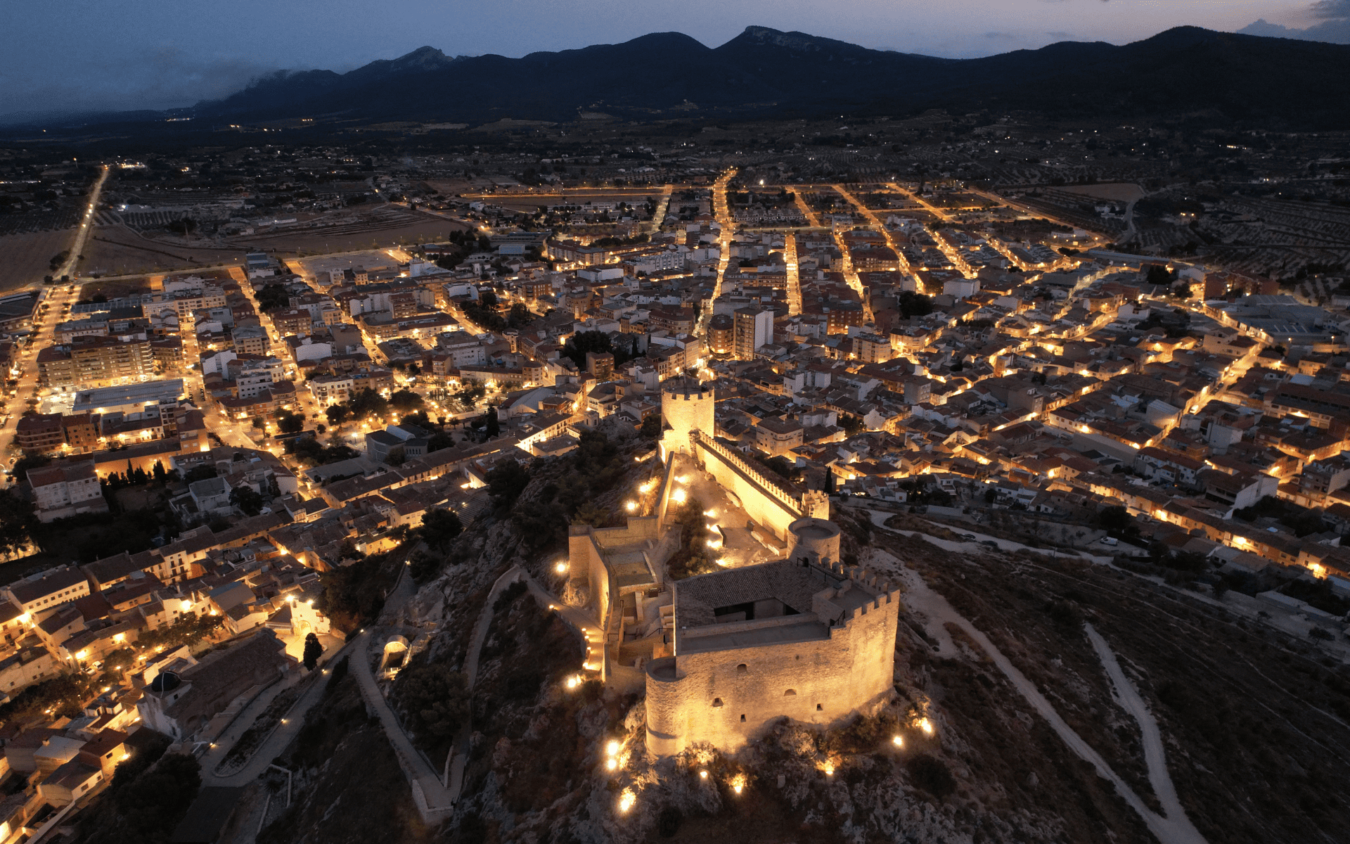
Castalla’s history can be felt on every corner. Its origins go back to Iberian and Roman times, but it was during the Muslim period that it became a strategic stronghold. From its striking 11th-century castle, set on a hilltop, the town controlled the Foia de Castalla — the inland basin it sits in — and the trade routes of the district.
The Reconquest brought it into the Crown of Aragon, and from then on the town grew around the fortress, shaping an old quarter full of stories and legends that live on today.
La Casa Roja: witness to a stately past
Our route begins at the imposing Casa Roja (the Red House), a 19th-century mansion whose reddish colour is impossible to miss. Built by the influential Soler family, this architectural gem stands out for its façade with wrought-iron balconies and decorative reliefs.
Although the interior is not open to the public, it is worth stopping to take in a building that was, in its day, a symbol of the town’s economic and social power. Civify tells you its history and the restoration plans that could turn it into a future cultural centre.
From the old town hall to the new one: Castalla past and present
The Plaza Mayor shows the balance between history and modernity. There stands the Antiguo Ayuntamiento, the old town hall, a Renaissance building with arcades that once served as a market and a meeting point for the castelluts, as people from Castalla are known.
Very close by, the current town hall occupies a modern building that respects the look of its surroundings. The two are joined by a glazed walkway, a symbol of the bridge between the town’s tradition and its progress.
Casa Rico: keepers of local history
Casa Rico, one of the oldest houses in Castalla, takes us back to the 16th century. Its ashlar stone façade and its heraldic coat of arms speak of the noble families who lived in the town. Today it houses the Municipal Archive, which keeps documents recording centuries of local history.
The house of Enric Valor: the cradle of Valencian fantasy
Castalla is also a land of writers. In its old quarter stands the birthplace of Enric Valor, one of the great storytellers in the Valencian language. A collector of rondalles (traditional Valencian folk tales), novelist and champion of the language, he is remembered every year at the Feria de la Fantasía, the town’s fantasy fair.
Discovering his story while walking the same streets he walked as a child is a gift for anyone who loves literature.
Museum of Lost Toys: nostalgia and make-believe
One of the most endearing corners of the walk is the museum “La Casa de los Pérez y los Juguetes Perdidos” (the House of the Pérez Family and the Lost Toys). A one-off museum where more than 1,200 antique dolls and toys, some of them from the 19th century, await you in a lovingly restored house.
Here you will learn the story of Ratoncito Pérez, the Spanish tooth fairy, and relive your own childhood as you explore sets that look as though they came straight out of a storybook. A perfect visit for families and for the curious.
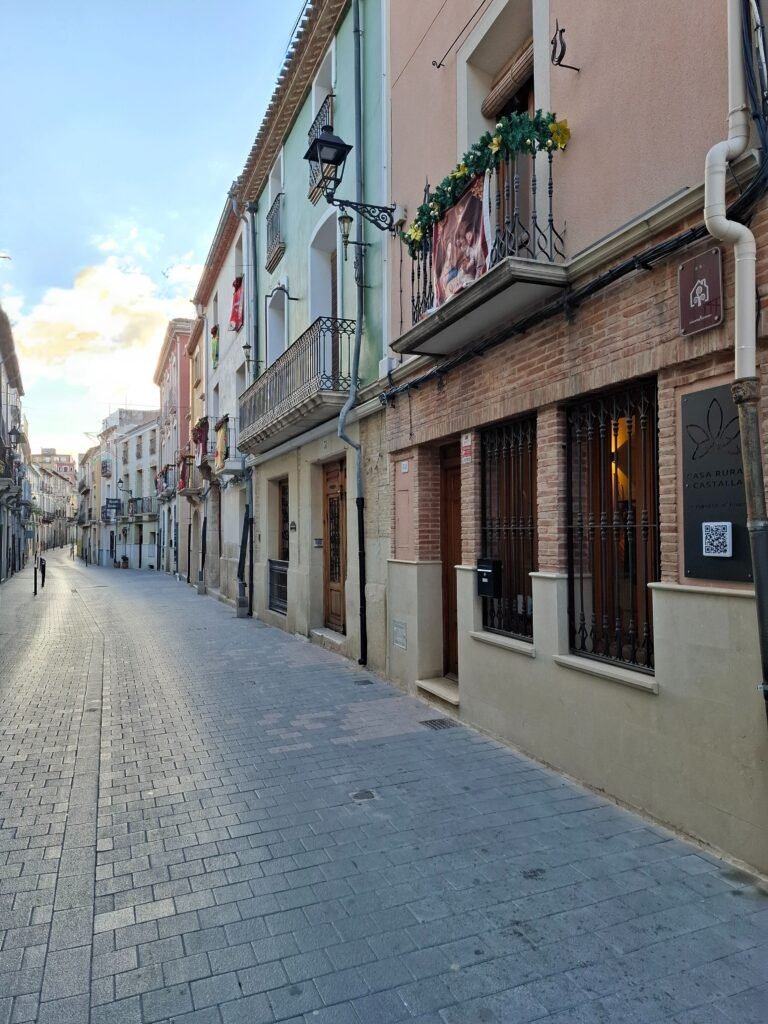
As we leave the museum and head towards the Iglesia de la Asunción, on our right we come across Casa Rural Castalla – Primavera d’Hivern, right on Carrer Major, the historic heart of the town 🏡. This restored old house keeps the essence of traditional castellut architecture, with stone walls and wooden beams that recall what the houses in this stately quarter were once like. Today, turned into a welcoming place to stay, it gives its guests the chance to live Castalla’s history from the inside, waking up each morning surrounded by heritage and with views of the castle that watches over the town from above. Without doubt, the perfect place to round off this cultural walk.
Iglesia de la Asunción: Gothic and Renaissance under one roof
The 16th-century parish church of Nuestra Señora de la Asunción (Our Lady of the Assumption) is one of the jewels of the route. Its Catalan Gothic style, its majestic single nave and its Renaissance chapels impress every visitor.
This is where the patronal fiestas and the high masses of the Moros y Cristianos (Moors and Christians) are held, a tradition we come back to further on.
Ermita de la Sang: a journey back to the Middle Ages
The 13th-century Ermita de la Sang (the Chapel of the Blood) was the first Christian church in Castalla after the Reconquest. Early Gothic in style, members of the local nobility rest inside it and its history is bound up with popular devotion. A place of quiet and austere beauty.
Calle Media and Plaza de los Casinos: everyday life and local flavour
Calle Media is the living artery of Castalla, where traditional shops and houses with flowers at the windows take you into a town with a soul.
Very close by, the Plaza de los Casinos is a meeting point for every generation. The old social clubs used to gather here, and it is still the perfect place for a coffee and a bit of atmosphere while the children play and their elders talk.
El Convento de San Sebastián: the Franciscan legacy
The former Convento de los Mínimos bears witness to the spirituality and the monastic life of the 18th century. Although it has civic uses today, its sober neoclassical architecture and its inner courtyard invite you to reflect on the town’s religious past.
La Casa del Fester: where tradition comes alive
No walk through Castalla would be complete without the Casa del Fester — the house of the fester, as those who take part in the fiesta are called — the temple of the town’s great celebration: the Moros y Cristianos. Costumes belonging to the comparses (the festival companies that parade, each with its own dress and band) are on display here, along with the origins of a fiesta that at the end of August fills the streets with music, colour and gunpowder.
Visiting it means feeling a whole town’s pride in its roots and in its ability to keep its traditions alive.
Discover Castalla with Civify: your guide in your pocket
Thanks to the Civify app, walking around Castalla is easier and richer than ever. Every point of interest on this route comes with detailed descriptions, images and historical curiosities so that you do not miss a thing.
With Civify you can:
✅ Explore at your own pace
✅ Get to know local history in an enjoyable way
✅ Reach exclusive content
✅ Plan your visit without needing a guide in person
Perfect for a break as a couple, with the family or with friends, the “Un paseo por Castalla” route invites you to enjoy a cultural, genuine experience in this corner of inland Alicante. Civify lists this old-town route in Spanish and English; it is worth checking in the app before your visit.
Fancy discovering Castalla with Civify and Casa Rural Castalla?
What we are suggesting is much more than a simple visit: discover Castalla at your own pace, walking through its history, its monuments and its streets full of life with the “Un paseo por Castalla” route on the Civify app.
Round off the experience by exploring its walking trails through the countryside of the Foia, climbing up to the medieval castle and enjoying the local food made with produce from the area. And to make your break complete, stay at Casa Rural Castalla – Primavera d’Hivern, where rustic charm and comfort come together so that you feel at home.
👉 Download Civify and let Castalla surprise you. We are waiting for you with the essence of a genuine town and a thousand stories to discover.
Ready to experience inland Alicante?
Book your stay at Casa Rural Castalla and take your time discovering places like Plascaves, Castalla Castle and the Sierra del Maigmó. Your inland Alicante getaway starts here.